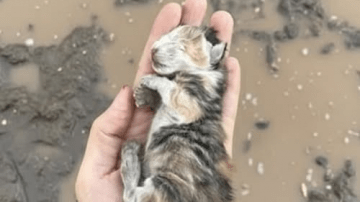
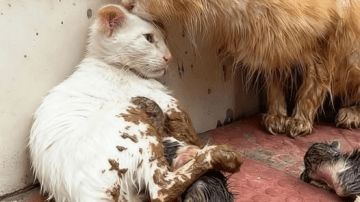
The morning commute often brings routine, but for one office worker, today delivered a twist of fate wrapped in a tattered bamboo basket. At the entrance of her workplace lay a sight that would challenge her resolve: a newborn kitten, soaked and fragile, its umbilical cord still attached. The consensus from colleagues was grim—leave it be, they advised, such a tiny creature wouldn’t survive. Yet, as the little one’s cold, tiny nose gently rubbed her finger, a powerful instinct to protect ignited within her. Gritting her teeth against the doubt, she scooped up the basket and embarked on a desperate race to the pet hospital, a silent vow made to a life barely begun.

The veterinarian’s words echoed the colleagues’ fears: less than 12 hours old, survival without its mother would be a struggle. But giving up was no longer an option. The worker, now a determined rescuer, decided to take the kitten home, ready to learn on the fly. Her office bag, usually filled with work documents, now carried a tiny, fragile life. The journey home was a blur of frantic planning. How would she keep it warm? What would it eat? Every minute counted, every decision critical. The weight of responsibility was immense, but so was the burgeoning love for the little creature nestled precariously in her care.

The next hours became a crash course in neonatal kitten care. Warm goat milk was administered via syringe every two hours, a relentless schedule that blurred the lines between day and night. Pee pads became essential, and the delicate task of stimulating defecation with a damp cotton swab was mastered. A makeshift incubator was fashioned from a cardboard box, old clothes, and a hot water bottle, providing crucial warmth.

At work, every free moment was a dash to the box, a quick check, a whispered reassurance, battling the constant fear that something might go wrong. This wasn’t just about feeding and cleaning; it was about pouring every ounce of hope and effort into a fight for survival.