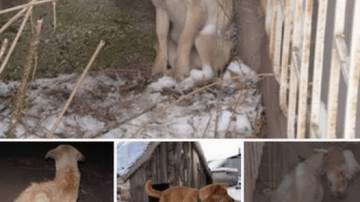
The air hung heavy with the scent of damp earth and decay, a common aroma in the forgotten corners where nature slowly reclaims what man has left behind. It was here, amidst the tangled undergrowth and the murmur of a shallow, murky creek, that a small, emaciated dog found itself clinging precariously to the rotting planks of a makeshift bridge. Its belly, a raw and angry pink, sagged with the weight of an advanced stage of mange, a cruel testament to a life lived on the fringes of survival. Each breath was a shallow gasp, each movement a desperate, strength-sapping effort. The dog’s eyes, wide with a mixture of fear and a fading spark of hope, scanned the indifferent surroundings, searching for a sign, any sign, of a reprieve from its agonizing predicament. The bridge, barely more than a collection of splintered wood beams, groaned under its slight weight, threatening to give way and plunge the helpless creature into the cold water below. This wasn’t just a physical struggle; it was a battle against the crushing indifference of a world that had, until now, offered only hardship and neglect.

Days had blurred into an endless cycle of hunger and pain for the dog, whom we’ll call “Hope.” She had been part of a small, feral pack, but illness had weakened her, making her a burden, and she was left behind. Driven by an instinctual need for food and shelter, she had stumbled upon this dilapidated bridge, a seemingly insurmountable obstacle on her quest for sustenance. Each attempt to cross resulted in a terrifying slip, her weakened limbs unable to gain purchase on the slick, moss-covered wood. The bridge became her prison, a thin line between a desperate past and an uncertain future.

One morning, a local botanist, Dr. Aris Thorne, was venturing deeper into the wilderness than usual, tracking a rare orchid he suspected grew in the hidden valleys. He was known for his quiet demeanor and his uncanny ability to blend seamlessly with his surroundings. As he approached the creek, the faint sound of whimpering caught his attention. At first, he dismissed it as a bird, but the persistence of the sound led him to the precarious bridge. His heart sank when he saw Hope, her fragile body trembling, one paw dangling precariously over the murky water.

Thorne, usually focused solely on his botanical pursuits, felt an unexpected pang of empathy. He cautiously approached, speaking softly, his voice a gentle murmur against the sounds of the forest. Hope, initially recoiling in fear, seemed to understand his intentions. Slowly, painstakingly, Thorne extended a blanket he carried for his research, nudging it towards her. After a tense moment, Hope tentatively sniffed the fabric, then, with a whimper, allowed Thorne to gently scoop her up.