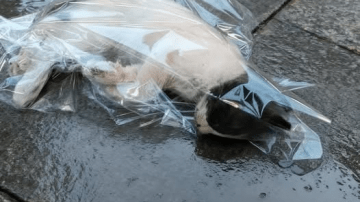
The humid summer air hung heavy, a stifling blanket over the cracked pavement. It was just another sweltering Tuesday until a call came in that would shatter the mundane rhythm of the day for animal welfare officer, Sarah Jenkins. A passerby had reported a dog, seemingly lifeless, abandoned by the side of a deserted road. Sarah, a veteran of countless rescue missions, braced herself for the worst. She had seen too many heartbreaking scenes, too many innocent lives discarded. Arriving at the location, a desolate stretch of forgotten highway, the sight that greeted her was stark. A emaciated dog, its ribs starkly visible beneath a matted, dark coat, lay motionless. A heavy, studded collar, a chilling contrast to its fragility, was its only adornment. A wave of despair washed over Sarah, but then, a flicker – a shallow, almost imperceptible breath. Hope, tenacious and fragile, sparked in the oppressive heat.

Although weak, the dog, whom Sarah affectionately named “Shadow” due to its dark fur and elusive past, responded to her gentle touch. With careful movements, she lifted Shadow onto a stretcher, his skeletal frame weighing barely anything. The ride to the emergency veterinary clinic was a silent prayer, Sarah’s eyes constantly darting to the rearview mirror, checking for any sign of change. The vet’s initial prognosis was grim: severe dehydration, malnutrition, and a host of infections. “He’s a fighter,” Dr. Emily Carter had stated, her voice tinged with cautious optimism, “but it’s going to be a long road.”

Weeks turned into a grueling blur of intravenous fluids, specialized diets, and a cocktail of medications. Shadow’s recovery was agonizingly slow, punctuated by setbacks that threatened to extinguish the fragile flame of his life. One evening, after a particularly worrying dip in his health, Sarah received a call from Dr. Carter. “He’s not responding to the antibiotics,” she said, her voice heavy with concern. “We might have to try something more aggressive.” It was a desperate gamble, a last-ditch effort to save a life that had already endured so much.

Miraculously, the new treatment worked. Slowly, painstakingly, Shadow began to turn a corner. The infections receded, his appetite returned, and the vacant look in his eyes was gradually replaced by a glimmer of awareness. Sarah spent every spare moment at the clinic, her presence a calming anchor for the recovering dog. She would read to him, softly hum melodies, and gently stroke his matted fur, watching as he slowly regained his strength.
Shadow’s physical wounds began to heal, but his emotional scars remained. He was timid, easily startled, and wary of human touch, a stark reminder of the trauma he had endured. Sarah understood that his journey to full recovery would involve more than just medical care; it would require patience, understanding, and unwavering love. She decided to foster him herself, bringing him into her home, where he could experience stability and kindness, perhaps for the very first time.