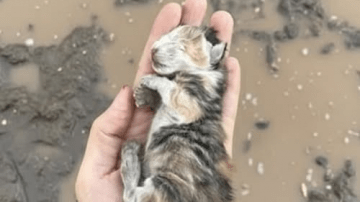
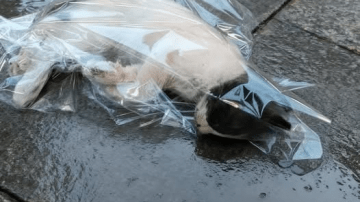
The morning sun cast long shadows, dappling the quiet street in a mosaic of light and shade. It was during this tranquil routine that a familiar path diverged into an unforeseen narrative of fragility and resilience. Underneath the dusty chassis of a parked car, a small, still form lay partially obscured. It was a creature so emaciated, so profoundly vulnerable, that it seemed to be merging with the very earth it lay upon, a faint breath away from becoming one with the sand and pebbles. This wasn’t merely a stray; this was a life teetering on the precipice, a testament to neglect that pierced the calm of the morning. Its eyes, though clouded with the haze of malnourishment, held a flicker, a desperate plea for existence that was impossible to ignore. The sight was a stark, guttural reminder of the unseen suffering that often lurks beneath the veneer of daily life, demanding not just attention, but intervention.

The intervention began with a gentle, tentative approach. Every movement was calculated, every whispered word intended to soothe a creature that had likely known only hardship. The puppy, a tiny silhouette of bones and matted fur, was too weak to move, its body a canvas of starvation. The immediate priority was warmth and careful rehydration, a delicate dance to revive a system on the verge of collapse. The veterinary team, contacted swiftly, arrived with a blend of urgency and profound compassion. Their initial assessment painted a grim picture: severe dehydration, critical malnutrition, and a host of secondary infections. The odds were daunting, whispered with the kind of clinical honesty that underscores true medical emergencies. Yet, in their eyes, there was also a fierce determination—a resolve to fight for this fragile life.

The first 48 hours were a tense vigil. Named “Sandy” for the gritty bed she was found in, the puppy’s struggle was a minute-by-minute battle. She was placed in an incubator, her tiny body hooked to an IV drip, receiving a slow, steady stream of vital fluids and nutrients. The team worked around the clock, administering medication, monitoring her temperature, and gently coaxing her to take small sips of a specialized rehydration solution. There were moments of despair, when her breathing grew shallow and her heart rate faltered, causing anxious glances and hushed consultations among the vets. Each tiny victory—a flicker of interest in a warm blanket, a soft whimper of acknowledgment—was celebrated as a monumental step forward, a sign that Sandy possessed an indomitable will to live.

As days turned into a week, Sandy’s progress, though slow, became more consistent. Her eyes, once dull and distant, began to hold a spark of awareness. She started to respond to gentle touches, her tail offering the faintest, most hesitant wag. The re-feeding process was meticulous, involving small, frequent meals of easily digestible food, gradually increasing in volume as her digestive system slowly healed. The veterinary clinic, initially a place of sterile urgency, transformed into a sanctuary of recovery. The staff, deeply invested in her journey, spoke to her in soft tones, offering comfort and encouragement. Sandy, in turn, began to show glimpses of the playful, loving spirit that had been buried under layers of suffering, hinting at the vibrant dog she was destined to become.
Sandy’s story, from the brink of oblivion to a slow but steady recovery, became a poignant reminder of the countless vulnerable animals often overlooked. Her journey underscored not only the critical need for immediate intervention but also the profound impact of compassionate care. It shone a light on the dedication of veterinary professionals and animal rescuers who tirelessly work to give second chances. As Sandy continued to gain strength, her story began to inspire, transforming a solitary act of rescue into a broader call for awareness. Her existence became a testament to resilience, a living embodiment of hope, and a powerful advocate for every animal deserving of protection, love, and the chance to thrive.