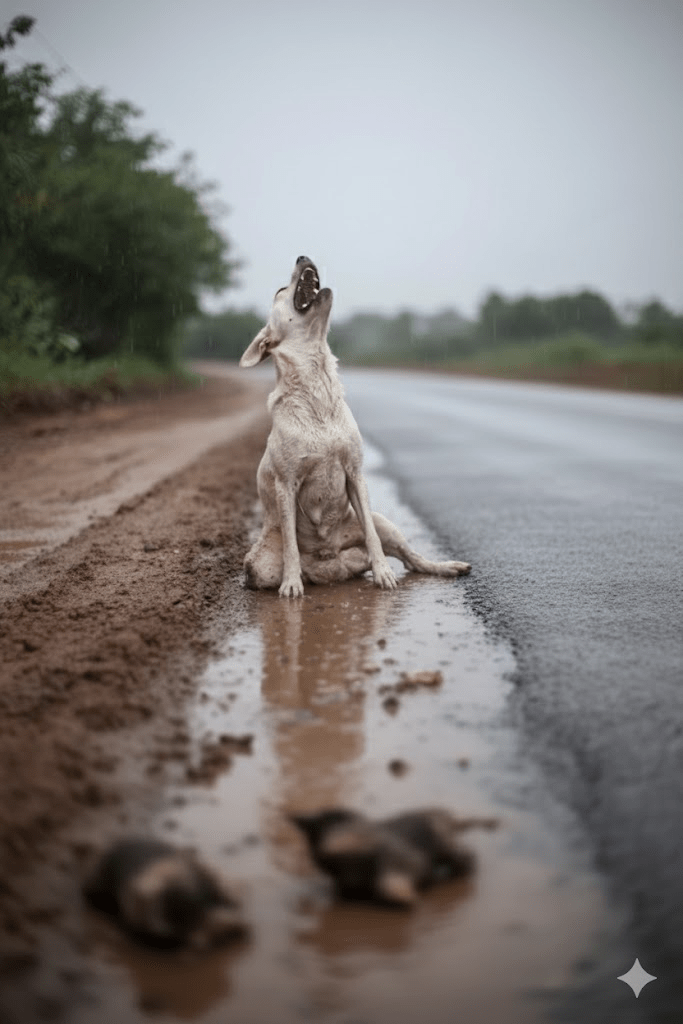
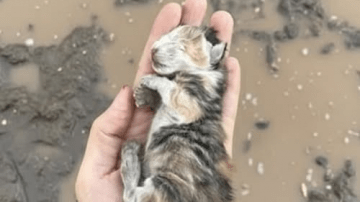
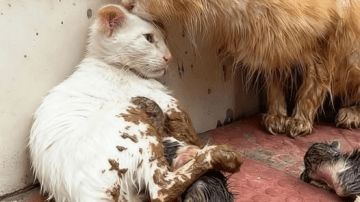
The image is a stark tableau of despair: a white dog, matted with mud, sits slumped in a roadside puddle, her head thrown back in a silent, agonizing howl. Her mouth is agape, a cavern of sorrow, and her body, visibly emaciated and scarred, tells a story of recent trauma. This isn’t just any stray; this is Sinead, a mother whose world had been shattered moments after she brought new life into it. Hit by a car on a desolate stretch of road, her tiny, vulnerable body bore the fresh wounds of impact, but her spirit was consumed by a far greater pain: her puppies were gone, scattered and lost in the chaos, and she cried for them for days, her pleas swallowed by the indifference of passing vehicles.
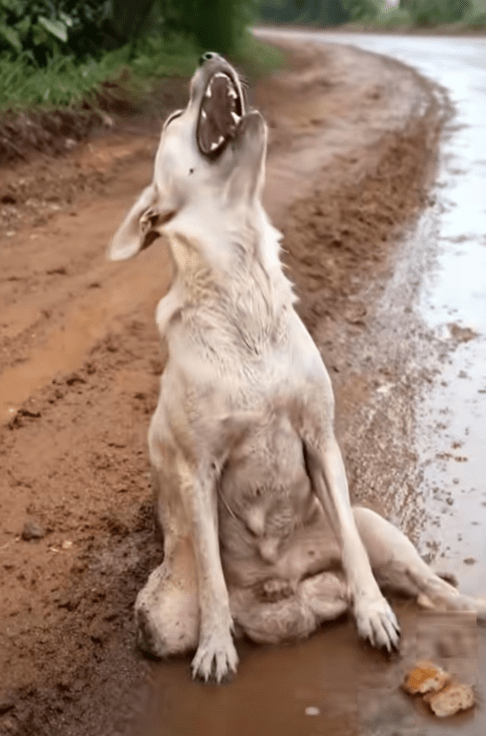
For 72 excruciating hours, Sinead’s mournful cries were the only testament to her existence on that lonely road. Each rumble of an approaching engine would ignite a flicker of hope in her weary eyes, only for it to be extinguished as cars sped past, their occupants oblivious or unwilling to see the suffering creature in their peripheral vision.
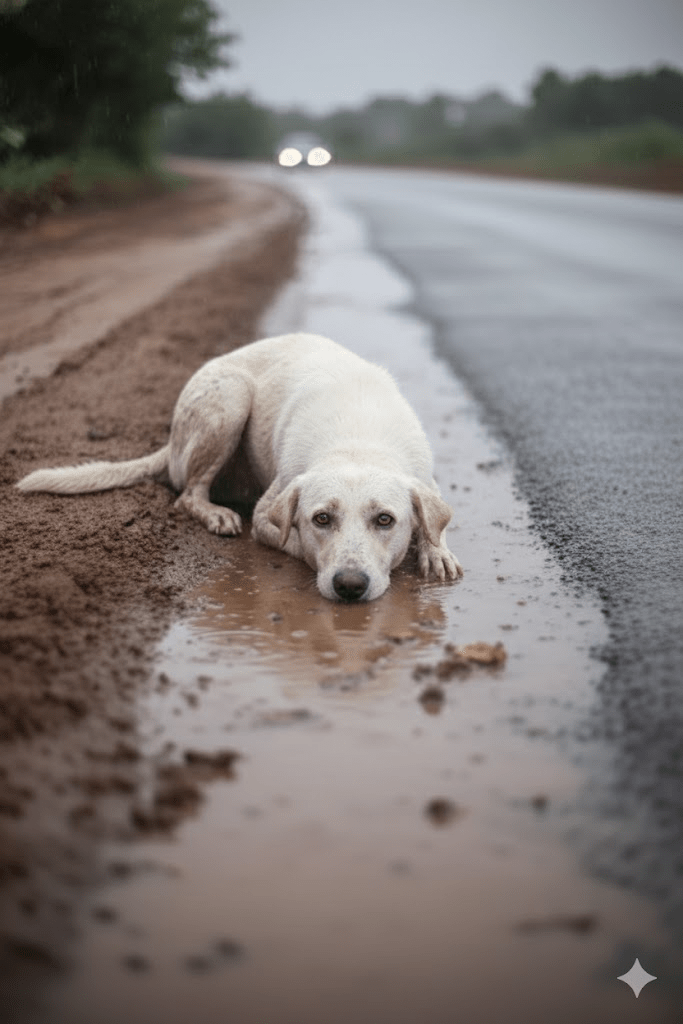
Her injuries, a twisted leg and internal bruising, made movement excruciating, yet her maternal instinct, a powerful, ancient force, compelled her to try, to drag herself inch by painful inch, sniffing desperately for the scent of her lost litter. Hunger gnawed at her, and thirst parched her throat, but the need to find her babies overshadowed every physical discomfort. She was a ghost of a dog, a living embodiment of sorrow, and it seemed her tragic fate was sealed.